
Nature finance in Africa: reflections from the 2026 African Natural Capital Alliance Nature Executive Fellowship
Africa is home to some of the world’s most ecologically significant and economically critical natural systems. How to embed nature into systems and instruments that position it as foundational economic infrastructure as these markets develop remains an important question. Thea Philip, Nicola Ranger and Laura Clavey reflect on insights from a recent convening and conclude that the momentum is real, the opportunity is vast, and while there are structural barriers to investment at scale, these are not insurmountable.
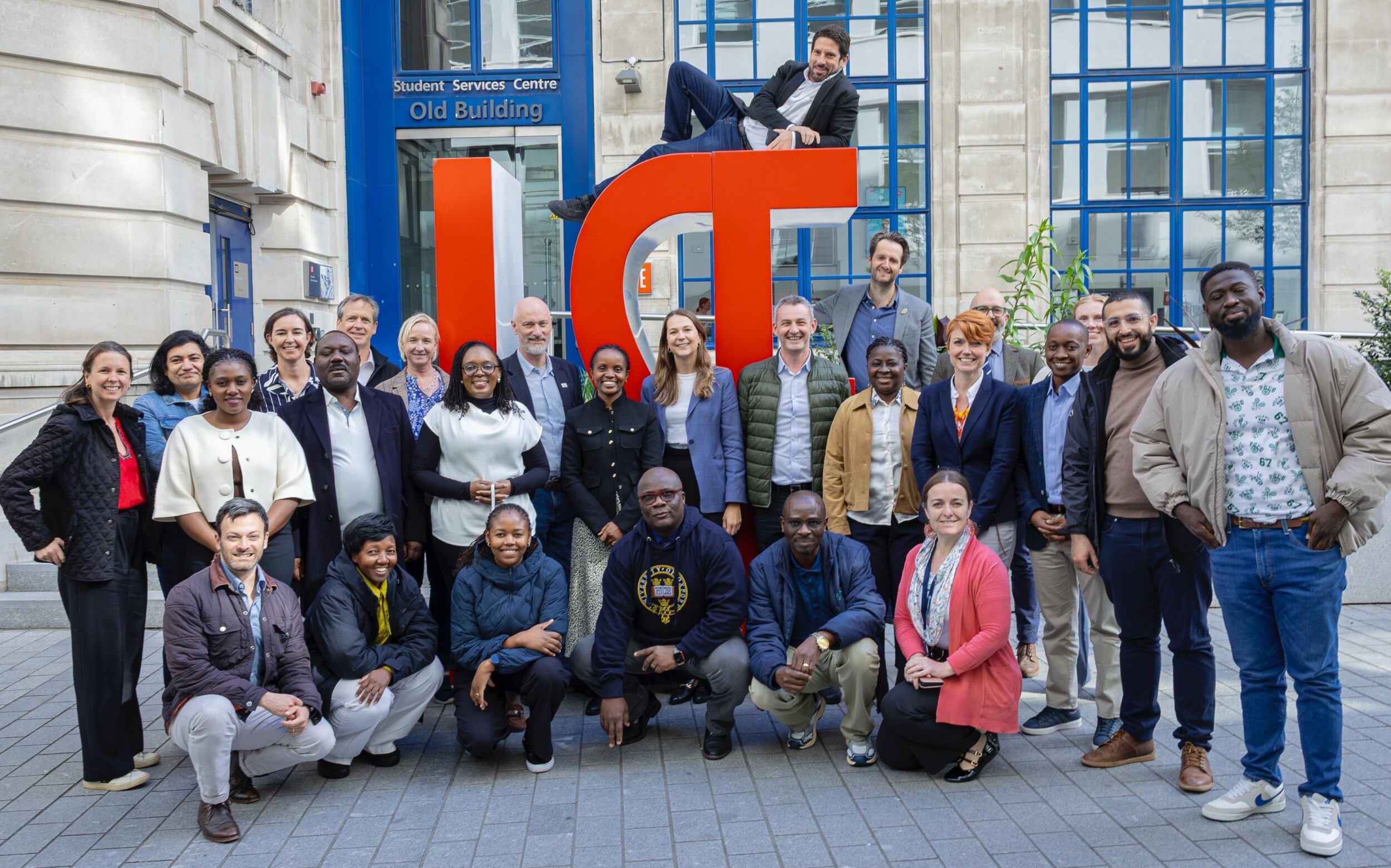
In May 2026, Earth Capital Nexus was delighted to host the 2026 African Natural Capital Alliance (ANCA) Nature Executive Fellows at LSE for a thematic day focused on mobilising investment in natural capital. The cohort comprised 17 leaders from across the African continent, representing regulatory bodies, insurers, financial institutions, industry groups and project developers for nature-based solutions. The day at LSE followed previous sessions at the Smith School of Enterprise and the Environment at the University of Oxford and the University of Cape Town Graduate School of Business.
UK Special Representative for Nature Ruth Davis, along with investment and insurance practitioners with experience mobilising finance into natural capital and in Africa, also provided their expert insights.[1]
The day explored questions including: How do we finance nature in Africa at the scale and speed required while ensuring that value is created and retained on the continent rather than extracted by global markets? What makes a nature investment deal in Africa genuinely investable and what common structural reasons cause deals to fall apart? How can insurance and blended finance be used to share risk across beneficiaries and transaction counterparties? A conversation ensued about what we know, what we don’t, and where the field is grappling with ongoing tensions that are holding back investment at scale.
Key insights from the convening
Nature is not ‘like’ infrastructure: it is infrastructure
Perhaps the most important conceptual shift expressed was that nature must stop being treated as an asset class to be bolted onto financial systems and instead start being recognised as the foundation upon which all economic activity depends. As one participant put it: if all the money in the world is essentially borrowed from nature, why do we need to find money to protect it? This reflects a structural incoherence at the heart of how nature finance is currently framed. The task is not just to finance green. It is to green finance by transforming the architecture of financial systems so that nature’s value is properly integrated and visible in decision-making.
The pipeline exists, but the barriers are structural
One of the most prominent observations was the volume of bottom-up innovation, insight and action already present in the field. Between 2012 and 2023, investments in nature-based solutions in Sub-Saharan Africa grew steadily by approximately 15% annually to surpass US$21 billion in total funding, but this remains only a fraction of what is needed. Participants were emphatic that this is not a pipeline problem. What is missing is fit-for-purpose investment structures and a better enabling environment, including clear definitions, supportive policy and upgraded legal and regulatory frameworks that incentivise flows of finance that support rather than harm it. The field is being held back not by a lack of ambition, but by systems designed for outdated ways of thinking that do not sufficiently value natural capital or the ecosystem services it provides.
Africa-centric solutions and knowledge must be the focus
A recurring theme was the mismatch between how African ecosystems are understood internationally and financing needs in reality. Participants were clear that Africa-centric research is not merely preferable but necessary to overcoming the barriers preventing large-scale capital mobilisation, such as the need to correct the disconnect between perceived and actual investment risk in Africa. Definitions of ‘nature-based solutions’ (NbS) rooted in other contexts and investment models designed for larger and more liquid capital markets are often ill-fitted to the African context. The field needs to build from African ecological and economic realities outward.
Carbon markets hold real potential but face limitations
Carbon markets were identified as a credible mechanism for scaling up nature finance, but participants were equally clear that carbon cannot be the whole story. Financial instruments need to look beyond any individual revenue stream and ask ‘does this create genuine, lasting positive impact and commercial returns that are bankable?’, such as through the production and sale of non-timber forest products, export commodities or through insurance-related resilience outcomes. Proof-of-concept projects matter, but they must eventually feed pipelines that investors and institutions can engage with at scale.
Verified impact is currently too expensive to mainstream
Monitoring, reporting and verification requirements were cited repeatedly as a structural barrier. The data needs to demonstrate that ecological impact exists in principle, but accessing data costs more than many projects can bear. This is not a peripheral concern as without credible verification, the case for institutional investment is weakened. With prohibitively costly verification, smaller projects are priced out before they start.
Questions remaining
The convening surfaced a set of questions that the field has not yet resolved and that will need to define the field as it matures:
- How does Africa build its own financial architecture for nature? This is not only a question of how the continent attracts capital from the Global North but also how Africa develops its own local financial systems, institutional and retail investors, and instruments that can embed the value of nature and fund local solutions at the scale required, while creating and retaining value in Africa.
- How do we develop policy and regulatory frameworks that actively drive greater investment in nature? Law, policy, and regulation were identified as potentially the most powerful levers available, yet they remain underdeveloped. What form would a fit-for-purpose legal and regulatory environment take, and who has the agency and ability to build it?
- How do we close the data gap? The African landscape remains underrepresented in the data that drives investment decisions. Closing that gap requires African-led and African-centred research.
Ongoing tensions
What makes this space difficult is not a lack of pipeline: it is that objectives can sometimes be in real tension with each other.
- Nature versus carbon. In some quarters, the relationship between nature finance and carbon markets remains adversarial. Resolving this tension – or at least making it productive – is one of the field’s most pressing tasks. A specific concern was raised about recent Article 6 negotiations under the Paris Agreement – around international cooperation and unlocking climate finance for developing countries – where some voices sought to require 1,000-year permanence periods for CO2 removals. This approach risks effectively banning nature-based solutions like reforestation and agroforestry in favour of a narrow focus on technological solutions like direct air capture. A broader understanding of ecological resilience recognises that removing or reducing emissions, and the associated climate stabilisation, addresses just one of nine planetary boundaries that create a safe operating space for humanity. Focusing on solely technological removals risks prioritising carbon while failing to achieve broader ecological stability.
- Long-term value versus short-term metrics. Investors argue that they need pipelines that can be aggregated, standardised and create a scalable flow of deals with rapid returns. Natural capital investments return value over longer horizons and in forms, such as resilience, that do not have a line on a balance sheet, despite underpinning the economic activity that does. The timelines, risk tolerances and success metrics of these two worlds are misaligned in ways that the field has not yet adequately bridged.
- Complexity versus simplicity. Solutions must be rigorous, but financial systems demand simplicity, standardisation and the ability to be verified. Ecosystems are irreducibly complex. Nature finance, if it is to work at the scale needed, must hold both of these truths simultaneously and keep the solutions ecologically meaningful while still workable for investors and regulators.
Next steps
Dorothy Maseke, Head of the ANCA Secretariat, closed the session with this call to action:
“The power of knowing is that once you know something, you see it. You can’t close your eyes and unsee it. I hope you leave London with open ears, a broken heart, fire in your bellies, clear sight, and renewed ambition.”
The ambition for future work is clear: build an economic and financial architecture that supports locally-led solutions and recognises the value of critical natural systems, close the data gap with Africa-centric research, develop policy and regulatory frameworks that actively enable finance to flow to nature-positive rather than nature-harming activities, and resolve – or at least productively navigate – the tensions between carbon and nature, scale and integrity, international capital markets and local value.
The ANCA Nature Executive Fellowship programme is supported by the UK’s Department for Environment, Food and Rural Affairs.
[1] The guest speakers at the convening were Amal-Lee Amin (Managing Director, British International Investment), Isabel Milligan (Head of Natural Capital Portfolio Development, Great Yellow), Christopher Egerton-Warburton (Founding Partner, Lion’s Head Global Partners), William Butler (CEO and Founder, GaiaSicura), Harry Farnsworth (Head of Carbon Supply & Origination [VCM] Carbon Bank, Rabobank), Nicholas Bruschi (Senior Nature Programme Lead, Institutional Investors Group on Climate Change) and Gregory Hess (Founder and CEO, Tree Global).