


Countries should be rewarded for investing in resilience and natural infrastructure – and El Niño shows why we must act now
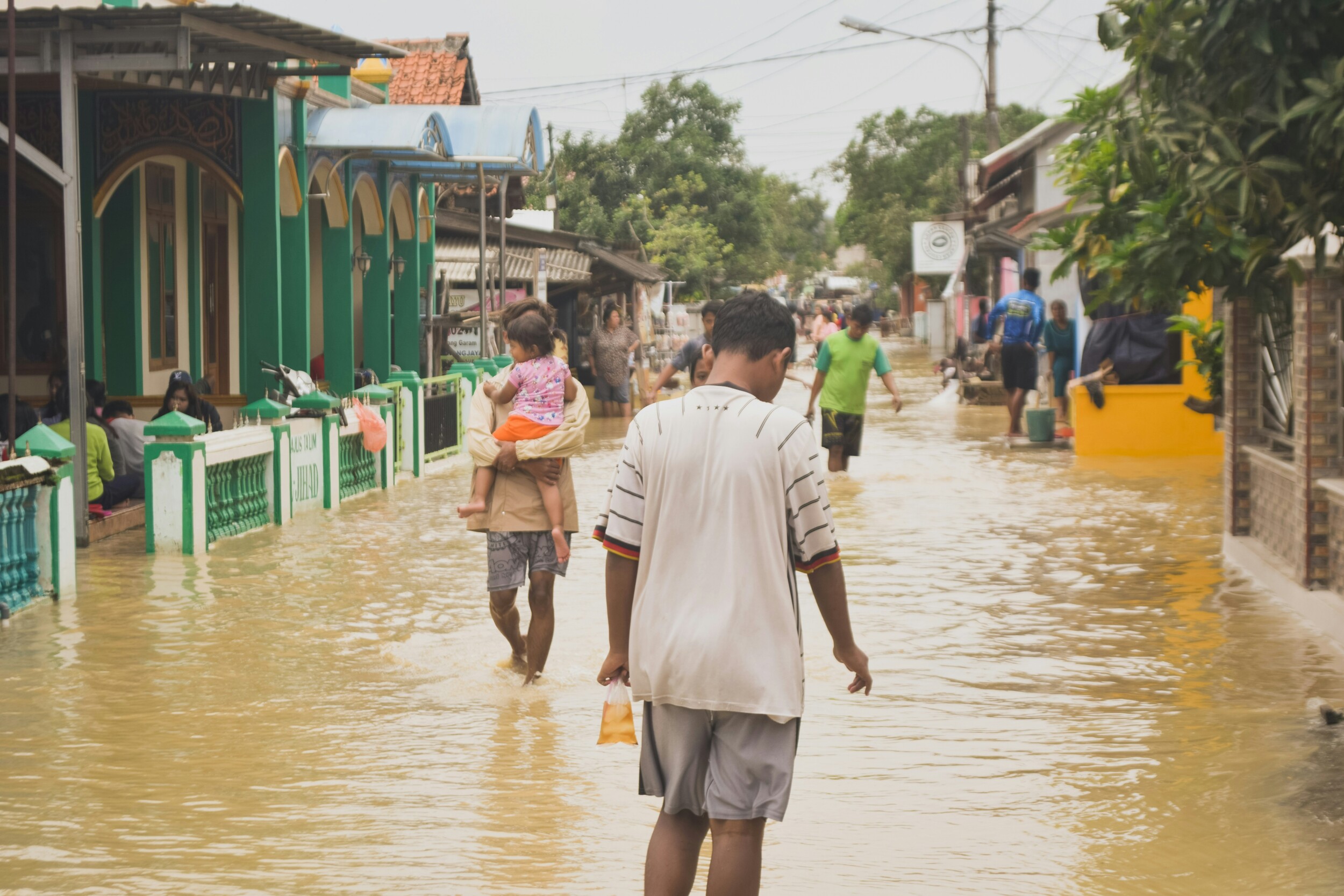
With an exceptionally strong El Niño threatening lives and livelihoods, Nicola Ranger and Tom Tayler call for action now to protect vulnerable communities and turn an imminent climate shock into earlier action and lasting systemic resilience. Reforming global financial rules that discourage upfront investment in resilience is central to that goal. Debt reforms, the upcoming replenishment cycle of the World Bank’s fund for low-income countries, and the UK’s 2027 G20 presidency offer opportunities to reward prevention rather than simply finance recovery.
The emerging El Niño is a wake-up call. Severe droughts and floods could devastate harvests, food and water supplies, and livelihoods, particularly across vulnerable countries in Africa. The World Food Programme warns that 49 million additional people could face acute food insecurity by the end of 2027. Combined with extreme heat and possible hikes in energy and fertiliser prices, disruption to food production could also fuel inflation, weaken growth and place further strain on the public finances of already indebted countries.
Yet countries are being asked to prepare within a financial system that can make recovery easier to finance than prevention. High borrowing costs and stretched budgets make it difficult to invest in resilience upfront. Spending on climate adaptation and the protection or restoration of natural capital is counted as an immediate fiscal cost, while the avoided losses, protected jobs and tax revenues, and lower future borrowing needs are too often absent from fiscal assessments, sovereign credit ratings and financing decisions. Our crisis risk financing system is also skewed towards providing concessional finance after the shock, rather than support before. This bias puts lives and prosperity at risk, and allows vulnerabilities to build up. We must change it now.
As sea surface temperatures rise, reform and political leadership must be harnessed
In the Pacific’s Niño 3.4 region, which scientists use as a benchmark to classify the intensity of El Niño, sea surface temperatures have reached a record 3.21°C above the 1991–2020 average. The approaching El Niño calls for action to strengthen early warning systems, anticipatory action, social protection and pre-arranged crisis finance before the worst impacts unfold, but also to tackle the underlying vulnerabilities that turn climate hazards into human and economic crises and put countries in a stronger position to withstand the next shock.
A rare convergence of reform and political leadership makes 2027 a pivotal year to build and consolidate such an anticipatory approach and address the bias that currently favours reaction after the event. The reform of the IMF–World Bank debt sustainability framework for low-income countries creates an opening for countries to be rewarded for their resilience investments with their creditors. Wider debt reform and developing countries’ debt challenges were on the table at the recent Commonwealth Heads of Government Meeting and IMF/World Bank Annual Meetings, security risks from climate change and nature loss were highlighted at the UN General Assembly, while the British Foreign Secretary, setting out priorities ahead of the UK’s G20 Presidency, emphasised the need to “make resilience central to creating a financial system that works for all”.
But the Annual Meetings also exposed the difficulty that countries face under current conditions. The International Monetary and Financial Committee’s closing briefing called for rebuilding fiscal buffers while protecting vulnerable people and investment, and highlighted concerns about debt and climate risks. The World Bank put mobilising private capital for jobs prominently on its programme. These priorities are closely connected. Adaptation and healthy natural systems support production, employment and revenues, while reducing the demands disasters like El Niño-driven flooding or drought place on public budgets. With developing countries’ external debt at a record US$9.4 trillion in 2025, those returns matter more than ever.
The economic case for adaptation and natural infrastructure has never been clearer – but how do we count the returns?
Looking beyond El Niño, risks to food production, water supplies and livelihoods from climate change are rising and adaptation investment is not keeping pace. Every increment of warming increases the risks countries must manage. Delaying investment in flood protection or water security can spare a budget today but leave a country facing much larger losses and emergency borrowing tomorrow – yet international public adaptation finance to developing countries still falls far short of what they need. The economic risks of nature loss are now clearly recognised too, but there are persistent gaps in delivering the 2030 targets in the Global Biodiversity Framework. Our work on critical natural systems as macro-critical infrastructure shows how some ecosystems are ‘too big to fail’ because their degradation could cause widespread economic disruption.
Sovereign finance is affected by these exposures, both directly and indirectly. Finance ministries, creditors and rating agencies need to understand the mechanisms and the investments that can reduce exposure. Recognising the return on investment will support their case. But measuring the return has long faced the underlying challenge that GDP records income from extracting natural resources while many services from intact ecosystems remain invisible. Adaptation spending and investment in nature are similarly recorded as costs, while their returns can be missing from fiscal analysis. The benefits of investments in resilience and nature as infrastructure need to be made as visible as the costs in fiscal budgets, sovereign finance and credit ratings.
Supporting data are proliferating. There is growing evidence for the impacts of ecosystem degradation on growth, exports and public revenues, plus sovereign credit, including from our recent work (see ‘Nature at risk, debt at risk’ and a study that models impacts on Thailand’s credit rating). The revised Debt Sustainability Framework for Low-Income Countries (LIC-DSF), due to come into use in the second half or 2027, provides a way to bring such evidence into debt assessments. Its long-term module can compare investment choices under different scenarios, including both costs and benefits. Though a significant step, its value will depend on countries’ ability to use it and on whether creditors respond to the findings – but there are already examples of application and good practice. In pioneering work earlier this year conducted with EarthCap and partners,[i] Uganda’s Ministry of Finance examined how irrigation, sustainable land management and agroforestry could change the economic and fiscal effects of a severe drought. The same approach is needed for climate-vulnerable middle-income countries.
Making nature count in fiscal decisions – and turning evidence into financing decisions
Globally, central banks and finance ministries are beginning to bring nature into fiscal and financial decisions, including through the Coalition of Finance Ministers for Climate Action’s work on adaptation, resilience and nature and the Network for Greening the Financial System. At the UN General Assembly meeting in September, foreign ministers recognised the role of nature as critical infrastructure and committed to exploring opportunities to integrate the protection and restoration of critical ecosystems into economic planning, risk management and decision-making.
A growing appetite to connect nature’s value with decisions about public money was evident at the Annual Meetings in Bangkok, which highlighted progress in valuing natural capital and saw new initiatives launched, such as the FAST programme to align fiscal policy and budgets with biodiversity protection. Some countries are already acting. Costa Rica’s marine environmental payments link mangrove conservation with coastal livelihoods. Nigeria’s natural capital accounts are being developed to inform economic planning, Zambia has integrated nature within its Public Investment Plan, while Bhutan became the first country to adopt ‘gross ecosystem product’ at the national level, with development planning connecting investment and growth with safeguarding natural assets. The next step is to embed this evidence consistently in budget forecasts, fiscal risk assessments and investment appraisal.
Finance ministries need data, tools and training to assess the returns to resilience themselves. Credible evidence will only change decisions if it can be used and understood by country institutions. We need a collaborative international effort to make data, open and transparent tools, worked examples and training more widely available to finance ministries and debt management offices, building on existing initiatives rather than creating parallel systems. Continued empirical work is also essential to demonstrate which risks and investments make a material difference to public finances.
The findings also need to reach the institutions that set financing terms. The EMDE Investor Taskforce’s work on credit rating methodologies provides a starting point for engaging sovereign investors, lenders and rating agencies on how credible resilience investments should affect financing terms.[ii]
IDA22 should reward investment before disasters strike
In December, negotiations start over ‘IDA22’ – the 22nd replenishment of the World Bank’s International Development Association resources for low-income countries. This will offer a further concrete opportunity to change the incentives. IDA should expand pre-arranged disaster risk finance, as stated by the Centre for Disaster Protection, which found that between 2018 and 2025 IDA committed nine dollars after a disaster had hit for every dollar it paid out through crisis finance agreed in advance.
But IDA22 needs to go further. Today, a government with little fiscal room can find it easier to finance recovery than to invest upfront in reducing the damage. A dedicated concessional window for resilience, providing grants and affordable long-term finance, would help make early investment a viable choice.
It should also reward countries investing in systems that protect their neighbours. Forests can regulate regional rainfall, and floodplains in major transboundary river basins can reduce losses downstream. Ahead of COP 30, we described tropical forests as anchors of economic prosperity and resilience – investment in this critical global infrastructure supports all countries. Progress on the Tropical Forest Forever Facility contributes to this. At a more fundamental level, a country making public good investments in global critical natural infrastructure – ‘G-SINS’ as we call them – bears much of the cost while others share the gains. Building on IDA21’s Global and Regional Opportunities Window, IDA22 could offer more concessional terms where those shared benefits can be demonstrated.
Other instruments can reinforce these positive incentives. Uruguay’s sovereign sustainability-linked bond framework includes a native forest target. Côte d’Ivoire’s framework, with targets for forest restoration and limiting forest loss, supported a €433 million loan backed by World Bank Group guarantees. These approaches show how finance can be linked to verified outcomes and help countries raise new capital, and how multilateral development banks can support the development of these new markets.
IDA22 can also do more to create the conditions for greater private investment. Our study of 54 nature investment vehicles shows that institutional and commercial capital can be mobilised to invest in nature as infrastructure. Blended finance can help overcome specific risks and barriers, but projects still need reliable revenues, capable delivery partners and an enabling policy environment. A guarantee can reduce a lender’s exposure to losses. It cannot create the income needed to repay a loan. IDA22 can do more to support project development, build investible landscape and basin programmes, establish credible payment mechanisms, mobilise value-chain companies and enable private investment where it could otherwise struggle to proceed. Our work demonstrates that public and philanthropic funding remains essential where substantial social benefits generate insufficient commercial revenues.
El Niño: the moment to step up
The civil society dialogue at the Annual Meetings reminded us that this is fundamentally about people. The rules of the game can make or break lives. The purpose of these reforms is ultimately to get funding to projects that protect lives and livelihoods. The coming El Niño will test how well we protect people and economies from known risks. But the bigger test is whether we turn this imminent shock into earlier action and lasting systemic resilience.
We cannot eliminate every climate hazard, but we can change the decisions and financing incentives that leave people so exposed. From COP 31 through IDA22 and the UK’s G20 presidency, governments, multilateral institutions, central banks, creditors and the private sector can seize this moment to make prevention financeable, recognise nature as critical infrastructure and reward countries for investing in resilience.
[i] The work in Uganda was carried out with Systemiq, NatureFinance and Teal Insights.
[ii] The Grantham Research Institute, Earth Capital Nexus and TPI Global Climate Transition Centre, all within the LSE Global School of Sustainability, are working together to convene investors and credit ratings agencies and we are conducting research on the opportunities to reward resilience.