


The global macro-criticality of nature: how nature degradation can raise the cost of government borrowing
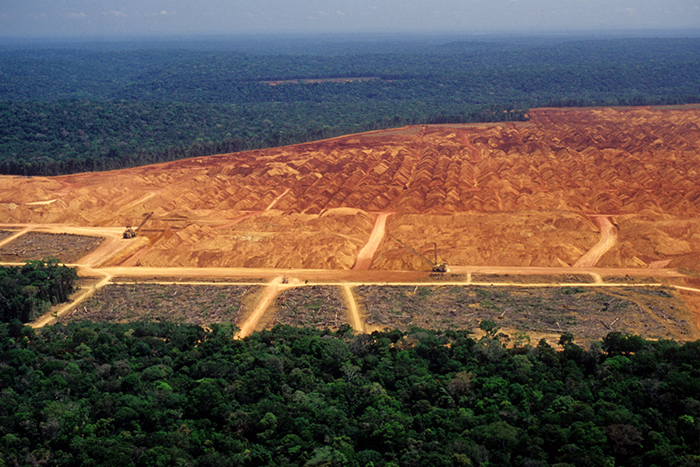
The degradation of nature has already contributed to higher borrowing costs for sovereign governments, especially for lower-income countries that are nature-dependent. Given the interconnection of global supply chains and financial markets, this has important implications for countries and policymakers across the world, write Alexander Wollenweber, Dieter Wang, Carlo Pasqua and Nicola Ranger.
The economic impacts from climate change have been well documented over the last few decades. However, far less is known about the economic consequences from severe and rapidly increasing nature degradation. This is despite the scale of nature-related financial risks: in 2020, around half of global GDP was estimated as moderately to highly dependent on ecosystem services – the benefits humans derive from nature. Nature degradation has accelerated in recent years. Research shows that the thresholds for the healthy functioning of the biosphere have been transgressed in around two-thirds of the globe’s land area in 2014. This process is particularly severe in lower-income countries where economic activity is closely tied to ecosystem services such as soil quality, access to clean surface water and groundwater, and provision of biomass, such as crops.
Against these recent developments, our analysis provides the first empirical evidence of the economic effects of nature degradation on the cost of government borrowing. We undertook research across 53 national economies between 2000 and 2020 and found that nature degradation led to higher sovereign borrowing costs, driving up government bond yields from around 25 to 70 basis points for two- and five-year maturities, particularly in lower-income countries in Africa and Asia.
Government borrowing costs matter for financial stability – and debt pressures are growing
Sovereign bonds – debt securities issued by national governments to borrow money – are the most critical asset class in global capital markets. Government debt amounts to over half of all outstanding debt securities worldwide. Their yields affect what governments pay to borrow and the fiscal space available for public services, infrastructure and investment. Indirectly, their yields affect the benchmark risk-free rate in the private sector, which effectively determines the borrowing costs for businesses and households across an economy. In financial regulation, the Basel framework allows countries to apply a 0% risk-weight for domestic sovereign exposures funded in local currency, encouraging their use as a safe-haven asset. In this way, the systemic importance of sovereign bond yields extends across the public and private sphere, and determines broader financial stability.
These financial dynamics matter acutely for lower-income countries, where the pressures exerted by sovereign debts have grown dramatically in recent years. Among the 78 poorest International Development Association (IDA)-eligible countries, external debt stocks doubled and interest payments quadrupled between 2012 and 2023. In the same period, the share of countries in debt distress rose from 16% to 45%. Lingering shocks from the COVID-19 pandemic, surging food and energy prices, and US dollar appreciation contributed to the weakening of these countries’ external positions.
At the same time, lower-income countries also house systemically important natural systems with stabilising ecosystems that are key for the global climate. This overlap creates a potentially vicious circle, where already constrained national fiscal policy spaces lower the ability of lower-income countries to finance adaptation and measures enhancing their resilience against future shocks in the first place, or incentivises unsustainable extractive activities. This could lead to further nature degradation in globally important areas, such as tropical rainforests.
The uneven impacts on borrowing costs linked to nature degradation
What was our approach to measuring the impacts of nature degradation on the costs of government borrowing? Rather than projecting future borrowing costs based on different scenarios of nature degradation, we examined the observable costs linked to historical nature degradation between 2000 and 2020. Using advanced biodiversity and ecosystem data, we examined three different indicators.
Our results show that countries with higher levels of nature degradation pay a clear sovereign borrowing cost penalty. For five-year government bonds, the average impact ranges from around 25 to 40 basis points; for two-year bonds, from around 45 to 70 basis points. It is not straightforward to estimate these effects. Our analysis controlled for observable conventional economic and institutional determinants of sovereign risk and country-specific characteristics, as well as unobserved global financial factors driving co-movements in bond yields. This approach strengthens our results and our confidence that the effects we observed are not misattributed to inflation or financial crises.
The borrowing cost consequences are uneven. For countries in the 90th percentile of borrowing costs, which tend to be lower-income economies in Africa and Asia, the penalty from biodiversity degradation can be up to three times higher than at 50th percentile. These countries have a higher dependency on ecosystem services such as fertile soils and pollination, and a higher economic contribution from sectors that rely on them, such as agriculture and forestry. As many of these countries face acute pressures from their national debt, continued nature degradation can exacerbate their macro-financial fragility, precisely where ecosystems degradation is nearing, and often passing, critical thresholds for their healthy functioning. However, the wider effects are unlikely to be limited to these nature-dependent and debt-distressed countries.
Higher-income countries are unlikely to be insulated
We investigated the domestic economic effects of nature degradation. Yet as related research has highlighted, the financial risks from nature degradation, and from economic activity to nature, do not stop at national borders. Instead, they transmit through the interconnected nature of global value chains and financial markets.
Recent research by the Banque de France has demonstrated the international transmission of the economic effects of nature-related risk. According to their analysis, disruptions to ecosystem services affecting agricultural productivity in breadbasket regions in lower-income countries raises food price inflation in France by over 2 percentage points and headline inflation by 0.5 percentage points within one to two years. The pattern of pronounced short-term impacts is consistent with our findings, and shows how local nature degradation can have global effects via imported food price inflation. With physical shocks such as floods, droughts and heatwaves becoming more frequent, as forecasts in nature degradation and climate change suggest they will, this could lead to persistent inflationary pressures on countries across the world.
International economic activity in higher-income countries also has international effects, as globalised value chains contribute to nature degradation in global biodiversity hotspots and systemically important natural systems. Around 80% of recent global land-use change impacts on biodiversity hotspots were associated with agri-food exports from Latin America, Africa and Southeast Asia. Almost 60% of land-use change impacts were driven by increased imports to consumer markets in China, the US, Europe and the Middle East.
Taken together, the evidence points to a global macro-critical risk: the financial consequences of nature degradation in one region can transmit to other regions through trade disruptions, food price volatility and the repricing of risk across interconnected sovereign debt markets.
Nature-related financial risks urgently need closer integration in economic frameworks
Nature loss and ecosystem degradation exhibit material financial implications that are still largely underrepresented in standard economic policy tools. Ministries of Finance need to incorporate nature-related vulnerabilities into fiscal planning and public investment decisions. The implications are equally pressing for central banks. The stronger effects at shorter two- and five-year maturities highlight the importance for inclusion in stress-testing frameworks. For the IMF and World Bank, this means integrating nature risks more systematically into the Lower-Income Countries Debt Sustainability Framework (LIC-DSF), the core framework used to assess debt vulnerabilities and guide borrowing and lending decisions in low-income countries. Our parallel study shows that this is both technically feasible and necessary as part of the current LIC-DSF review.
In summary, nature-related financial risks need to be integrated more systematically into macroeconomic and debt sustainability frameworks to help navigate the potential vicious cycle of debt, climate and nature. Our work with the Ministry of Finance of Uganda highlights this clearly: shocks affecting climate-sensitive and nature-dependent sectors can weaken growth, exports and fiscal space, with direct implications for debt dynamics. This underscores why Ministries of Finance need to reflect nature-related vulnerabilities in fiscal planning, and why the IMF and World Bank should incorporate such risks more explicitly into the LIC-DSF.
While more research is needed in this area, the initial evidence is clear. Nature degradation is not simply an ‘environmental issue’ or a future risk. Instead, the structural economic, fiscal and financial stability risks are being felt now across the world, and this issue demands much closer attention from policymakers, Ministries of Finance, credit rating agencies and financial institutions.