


Nature as critical infrastructure: redesigning how the UK invests in what it depends on
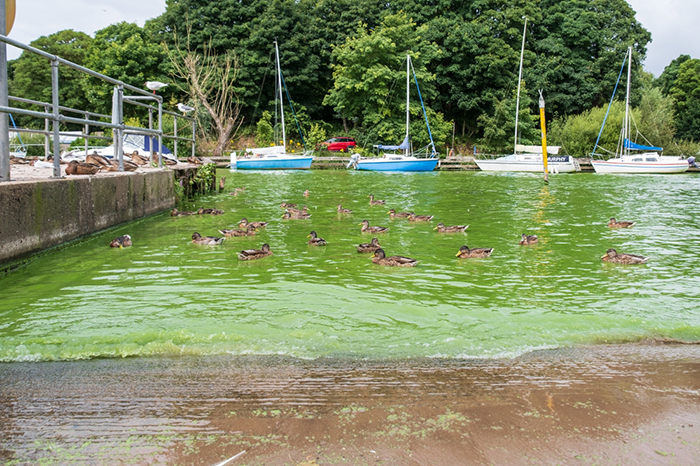
While the UK’s biodiversity frameworks are world-leading, their outcomes are not. New evidence shows that the country is on track to meet just three of its 23 national biodiversity targets, and cases like the contamination of Lough Neagh show the reality of environmental damage. This lacklustre performance is due not to a deficit of ambition but to a fundamental misdiagnosis – and correcting it requires treating nature as what it is: critical economic infrastructure, argues Nicola Ranger.
The UK’s recent assessment of progress on its biodiversity commitments – presented in the Seventh National Report to the United Nations Convention on Biological Diversity – is sobering. Progress on 20 of 23 national biodiversity targets aligned to the Kunming-Montreal Global Biodiversity Framework is insufficient – and the targets on which the UK is falling behind are precisely those that matter most for the health of the natural environment: halting species decline, restoring habitats, improving water quality, reducing harmful subsidies, and mobilising private finance in support of nature. Only three of these failures concern a lack of policy frameworks; the majority involve policies that are in place but are not working.
A perpetuating pattern of failure?
This record is consistent with a broader diagnosis. On the environment, the UK succeeds where outcomes are easy to measure, governance is centralised, and benefits are attributable to individual actors, as with chemical regulation or the monitoring of certain air pollutants.
Yet Britain continues to fall short where the benefits are public goods, systems are spatially interconnected, and risks are non-linear and long-term.
Biodiversity, water quality and soil health all meet these criteria. Human impacts on these ecosystem services have real effects on people’s lives and the economy, as cases such as the algal blooms of Lough Neagh and pollution of the Wye Valley remind us.
Solving such challenges through the same fragmented, project-by-project, thin-market approaches that have failed to date is not a strategy: it is a continuation of the problem.
Nature as ‘critical national infrastructure’ and the costs of inaction
The UK’s 2025 Environmental Improvement Plan highlights how nature enables, drives and protects domestic growth. However, the framing that has dominated UK nature policy – treating natural systems as just unpriced ‘externalities’ – is insufficiently powerful to protect what is the UK’s foundational infrastructure for growth and wellbeing and deliver at the required scale to achieve the commitments.
A more productive starting point would be to recognise nature as the UK’s fourteenth form of critical national infrastructure (joining the 13 CNI sectors already identified). River catchments regulate water supply. Soils underpin agricultural productivity. Functioning ecosystems stabilise local climates, buffer against flood events and sustain supply chains. When these systems fail, the consequences are not marginal and sectoral but systemic and economy-wide.
Failing to address nature degradation in the UK and globally could reduce UK GDP by 6 to 12 per cent below baseline by 2030, potentially erasing £150 to £300 billion in economic value, our research has estimated. This is also a risk to business and finance – and jobs. Around half of the £4 trillion in assets held by UK financial institutions are at least moderately dependent on ecosystem services. Environmental degradation in the UK affects more than just agriculture – it impacts manufacturing, construction, energy, with the potential security risks highlighted by the Government’s own research.
More than half of UK nature-related risks originate overseas, embedded in supply chains, commodity prices and trade routes: from the Panama Canal drought of 2023–24 threatening US$270 billion of cargo, to rubber prices surging by 50 per cent following deforestation-linked droughts, to avian flu and invasive species disrupting food supplies. These are not environmental footnotes: they are macroeconomic exposures that belong in fiscal frameworks and financial stress tests.
Why markets are not enough
Nature finance – defined as finance that conserves, restores or sustainably uses nature – encompasses two distinct imperatives. The first is mobilising new investment in nature-positive activities. The second, equally important, is ensuring that existing financial flows stop funding degradation. Both are required. On mobilising private finance, just last week the Government launched a new tranche of standards for investors to help finance flow and its work on establishing nature markets is admired internationally.
Yet, our recent paper with the Leverhulme Centre for Nature Recovery reported an annual finance gap for nature recovery in the UK of £56 billion. Public sector biodiversity spending in 2022/23 stood at just £876 million, or 0.03 per cent of GDP. The shortfall cannot be closed by market mechanisms alone.
This is not because markets are without value. Biodiversity Net Gain legislation, Nutrient Neutrality Principles, and the woodland and peatland carbon codes are genuine institutional innovations that are internationally leading. But research by zu Ermgassen and colleagues (2025) documents systematic integrity failures across all major nature markets globally: metrics that do not reflect real ecological outcomes; a widespread lack of additionality; ‘leakage’, where the problem is displaced elsewhere; poor transparency; and weak enforcement. No major nature market currently meets the minimum standards required to deliver genuine environmental benefit.
Something, therefore, is missing. The deeper problem is structural: the benefits of nature are non-excludable, the costs of degradation are diffuse, and the governance of natural systems is fragmented across actors and jurisdictions. These are the conditions that define a public goods problem, not a market failure amenable to price signals alone.
Lough Neagh: critical infrastructure left unmanaged
Nowhere illustrates this more acutely than Northern Ireland’s Lough Neagh. The UK’s largest freshwater lake and the source of drinking water for around 40 per cent of the province, Lough Neagh has experienced three consecutive years of toxic blue-green algal (or cyanobacterial) blooms so large they are visible from space. The blooms are caused by phosphorus run-off from agriculture and wastewater treatment, which has driven substantial increases in nutrient loading in the Lough.
In March 2026, water testing reported by The Guardian revealed the presence of genes conferring resistance to carbapenems, the last-resort class of antibiotics used when all others have failed, alongside markers of human and livestock faecal contamination. This ecological crisis has thus become a public health issue – and is undermining local business. Declan Conlon, a third-generation eel fisherman, has brought a judicial review against the Department of Agriculture, Environment and Rural Affairs at Belfast’s High Court, arguing that the authorities have permitted the Lough’s collapse through inaction. A full hearing is listed for May 2026.
This is textbook infrastructure failure. The market failures are multiple and compounding: the benefits from public goods are ‘non-excludable’ (i.e. no one can be excluded from benefitting and thus no one wants to finance them), pollution sources diffuse, ecological thresholds non-linear, and governance fragmented across multiple departments and landholdings. The agri-food intensification strategy – under which pig numbers in Northern Ireland have risen from 517,000 to 745,000 and poultry numbers from 19.5 million to 25.8 million since 2013 – has continued to receive public support while the ecology of the catchment has deteriorated. Conversion of land around the Lough over decades means more runoff into its waters while the Lough itself received no equivalent planning, governance or investment. Yet managing the Lough and our other natural assets requires the same long-term, multi-actor governance that we apply to ports, motorways and water treatment plants.
What needs to change – three foundational reforms
1. Recognise nature as critical infrastructure and treat it with the same seriousness as other critical infrastructure, not just as an environmental issue.
This means integrating natural capital into national infrastructure strategies and fiscal frameworks. The risks also need to be considered within business and financial decisions – both to manage risks and to help steer capital away from investments that increase systemic risks to the UK, for example by incorporating ecosystem degradation into the stress tests required by central banks and financial regulators, in line with the recommendations of the Taskforce on Nature-Related Financial Disclosures.
2. Deploy the National Wealth Fund as a scaled-up blended finance facility for nature.
Our research has shown that the UK’s current support for nature mainly takes the form of agri-environment schemes. A patchwork of funds exists beyond this, such as the Nature Recovery Fund, but the scale is tiny versus the need. Project-by-project £50,000 grants are helpful but cannot address the critical role nature plays as systemic infrastructure. The UK has the institutional capacity, through the National Wealth Fund, to replicate at domestic scale what public banks have demonstrated globally: that strategic deployment of concessional public capital can mobilise six to 25 times as much private investment through guarantees and first-loss structures.
Our study showed that globally, blended finance facilities have mobilised over US$3 billion into nature recovery since 2018. The UK currently has no equivalent dedicated facility. Such a facility could support delivery of England’s strategic Land Use Framework, mobilising capital to invest in the critical natural infrastructure needed for growth and wellbeing.
3. Accompany investment with regulation.
Blended finance without regulatory floors will not work. For river catchment systems like Lough Neagh’s, for example, strategic blended finance investments could be combined with mandatory nutrient caps, enhancing the capacity of environmental regulators to act, and performance-based payments to farmers for ecosystem services.
Given that nature underpins UK productivity, we can afford to act. The evidence base is in place. The institutional architecture largely exists. The principles are established. The current failure lies in matching the scale and type of problem with instruments of equivalent power. Policy must be redesigned so that the economy invests in the systems it depends on, with nature being key among these: moving from managing decline to designing a nature-positive, resilient growth model. This is essential for Britain’s prosperity and productivity, and for the health and wellbeing of its people.
This commentary draws on a keynote delivered by the author at the Civil Society Forum on Nature Finance, Queen’s University Belfast, on 19 March 2026 and builds upon Ranger et al. (2025) The UK nature finance ecosystem: status and opportunities for scale, Leverhulme Centre for Nature Recovery; and Ranger et al. (2024) Assessing the materiality of nature-related financial risks for the UK, Green Finance Institute. The research is supported by the Natural Environment Research Council’s Integrating Finance and Biodiversity programme.